

Introduction
Cricket has never been just a game for its followers. It is a routine, a conversation starter, a shared emotion that moves through homes, streets, offices, and friendships. For decades, fans arranged their schedules around match timings, making sure they were near a television or radio when the first ball was bowled. Missing a match often meant missing the story entirely.
The rise of the internet quietly changed that relationship. What once required planning and patience now fits into everyday life. Live cricket online allows people to follow matches while traveling, working, studying, or relaxing. The game no longer waits for the viewer — the viewer carries the game wherever they go.
This shift is more than a technological upgrade. It reflects a broader change in how sports are experienced in the modern world. Cricket has moved from a fixed place and time into a continuous presence, always accessible and constantly discussed. The digital screen has become an extension of the stadium, bringing every over closer to fans regardless of distance.
Understanding live cricket online is therefore not only about streaming matches. It is about how technology reshaped attention, connection, and participation, turning a scheduled event into a living, ongoing experience.
The Early Days of Following Cricket
Long before screens fit into pockets, following a cricket match required patience and imagination. For many fans, the first connection to the sport came through radio commentary. The commentators’ voices carried the entire match — every appeal, every boundary, every moment of tension — all described in words vivid enough to paint pictures in the listener’s mind. Supporters didn’t see the cover drive; they felt it through expression and excitement.
Television later transformed that experience. Live visuals allowed fans to witness technique, field placements, and player emotions directly. Slow motion replays revealed details that radio could never explain. Yet television still demanded commitment. Viewers needed to be present at the right place and the right time. Missing a session meant losing a piece of the match’s story.
In many regions, international matches were not always available on local channels. Fans woke early or stayed awake through the night hoping highlights might appear. Newspapers often completed the narrative the following morning, publishing scorecards and summaries that readers studied carefully to understand how the game unfolded.
Cricket, during this era, was something people adjusted their schedules around. The match controlled the routine rather than fitting into it. Following the sport required planning — and sometimes sacrifice — because access was limited by broadcast reach and time zones.
This foundation of anticipation and effort makes the modern experience remarkable. The arrival of the internet did not simply add convenience; it removed the boundaries that once defined how closely a fan could stay connected to the game.
The Birth of Live Cricket Online Updates
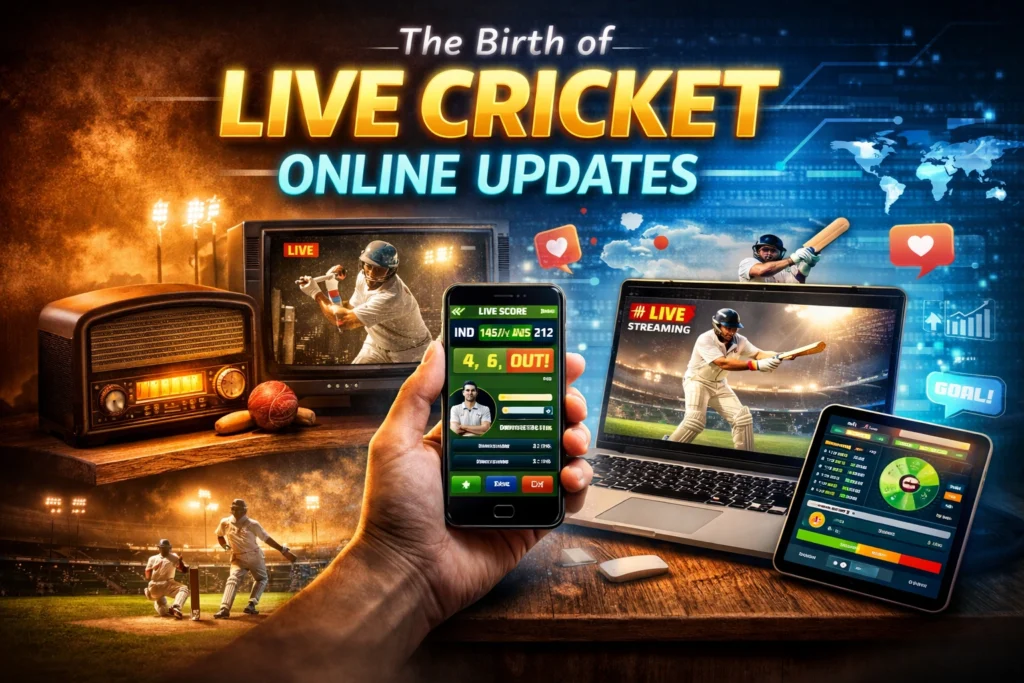
The first real step toward live cricket online was not video streaming but real-time score updates. Before fans could watch matches, they began to follow live cricket online scores through websites providing ball-by-ball commentary. Refreshing a page every few seconds became routine, especially for people in offices, schools, and public places where television access was impossible.
These early live cricket online commentary services changed fan behavior completely. Instead of waiting hours for highlights, supporters could follow every over, every wicket, and every partnership as it happened. Even without visuals, live cricket online updates created tension similar to watching the match. A sudden wicket notification during work could instantly shift a fan’s mood.
As internet access expanded, more platforms started offering detailed live cricket online scorecards. Fans tracked strike rates, run rates, and session summaries in real time. The match was no longer a delayed event — it became a continuous digital experience. Many supporters began keeping a browser tab open throughout the day just to stay connected with live cricket online coverage.
Gradually, interaction became part of the experience. Message boards and chat sections allowed fans to discuss live cricket online matches while they were happening. Opinions, predictions, and reactions flowed alongside the score updates. This created a community feeling that traditional broadcasting never fully offered.
This stage was important because it prepared audiences for streaming. By the time video arrived, people were already accustomed to following live cricket online throughout the day. The habit had formed — fans wanted constant connection, not delayed summaries.
In many ways, text commentary laid the foundation for modern streaming. It proved that fans did not always need television to stay emotionally invested. They simply needed access. And once people experienced the convenience of live cricket online tracking, returning to limited coverage no longer felt acceptable.
The Rise of Live Cricket Online Streaming
After years of text updates and score tracking, the biggest transformation arrived with live cricket online streaming. For the first time, fans could actually watch matches through the internet instead of just reading about them. Early live cricket online streaming platforms were simple and often unstable, but they delivered something revolutionary — visual access without television.
At the beginning, video quality was low and buffering was common. Still, viewers preferred struggling with slow connections rather than missing the match entirely. The demand for watching live cricket online grew rapidly because it removed geographic restrictions. A fan living far from their home country could now follow their national team through live cricket online broadcasts without depending on local TV networks.
Soon, technology improved. Faster internet speeds allowed high-definition live cricket online streaming with multiple camera angles, replays, and real-time graphics. Features once limited to professional television coverage became available on mobile devices. Viewers could watch boundaries again instantly, analyze bowling actions, and follow ball tracking through live cricket online match coverage.
Another major change was flexibility. Television required viewers to sit in one place, but live cricket online platforms allowed fans to watch anywhere — at work, in transport, in cafes, or outdoors. The match adapted to the viewer’s schedule instead of the viewer adapting to the match. This convenience made live cricket online viewing part of everyday routine rather than a special planned activity.
Streaming also opened doors to leagues and tournaments that previously had limited visibility. Fans started exploring competitions from different countries because live cricket online access made them easily available. The sport’s reach expanded naturally, connecting audiences who had never followed those matches before.
With stable apps and reliable streams, watching cricket online no longer felt like an alternative to television. For many supporters, live cricket online streaming became the primary way of experiencing the sport. The internet was no longer supporting cricket coverage — it had become the main stadium for millions of viewers worldwide.
Mobile Phones: The Era of Live Cricket Online Anywhere
The real explosion of live cricket online happened when smartphones became common. Earlier, people watched on computers, but mobile devices turned live cricket online streaming into a constant companion. The match was no longer tied to a location. It moved with the viewer.
Today, fans do not wait to reach home to watch a match. They open apps and instantly access live cricket online matches wherever they are. During travel, office breaks, college classes, or late-night hours, watching live cricket online on mobile has become routine. The portability of phones changed viewing habits completely because access became immediate.
Notifications made the experience even stronger. A wicket alert, boundary update, or score change appears instantly, pulling attention back to the game. Even when someone is not actively watching, live cricket online updates keep them connected. The match continues in the background of daily life.
Because of mobile data networks, fans can switch between short watching sessions throughout the day. Instead of sitting for hours, people check key overs, return later, and still follow the story through live cricket online coverage. The game fits modern schedules without losing excitement.
This flexibility also increased audience size. Many viewers who previously could not dedicate long hours to television now follow the sport regularly through live cricket online streaming apps. Cricket became more accessible to students, workers, and travelers who stay constantly on the move.
The smartphone effectively became a pocket stadium. With headphones and a screen, a viewer can experience commentary, crowd noise, and visuals anywhere. As a result, live cricket online viewing is no longer an alternative option — it is the normal way millions experience the sport every day.
Social Interaction During Live Cricket Online Matches
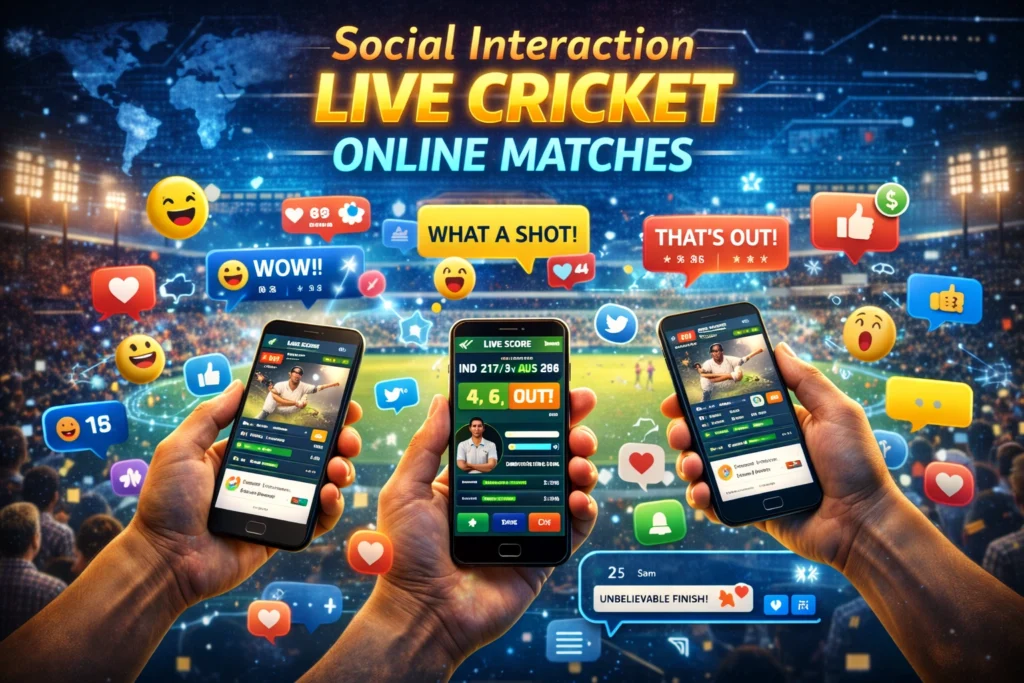
One of the biggest changes brought by live cricket online is the way fans interact while the match is happening. Earlier, discussions started after the game ended. Now conversations happen during the match because live cricket online streaming runs alongside chats, comments, and reactions in real time.
While watching live cricket online matches, supporters share opinions instantly. A boundary leads to immediate celebration messages, and a wicket creates instant debate. The match is no longer a silent viewing activity; it becomes a shared digital gathering. Fans watching from different cities or even countries react together through live cricket online discussions.
This constant communication keeps viewers emotionally connected. Even if someone is watching alone on a phone, they are still part of a larger crowd following the same live cricket online coverage. Reactions appear within seconds of every ball, turning each over into a collective experience.
Another effect is faster analysis. During live cricket online streaming, people discuss team strategies, field placements, and player performance instantly. Instead of waiting for experts after the match, audiences create their own ongoing commentary while watching live cricket online.
Memes, quick reactions, and short clips also spread rapidly during matches. A single moment from a live cricket online match can circulate everywhere within minutes, bringing more viewers back to the stream. This keeps attention focused on the game throughout its duration.
Because of this interaction, cricket is no longer just watched — it is participated in. Live cricket online viewing combines the match and the conversation into one experience, making fans feel closer to the action even when they are far from the stadium.
Personal Control and Customized Viewing
Another noticeable change in the modern viewing experience is control. In the past, audiences watched whatever the broadcaster chose to show. Camera angles, replays, and commentary style were fixed for everyone. Now the experience feels far more personal.
Viewers can pause the action, rewind important moments, or jump directly to highlights if they missed a session. Some prefer detailed statistics, while others simply want uninterrupted play. Many platforms even allow language selection for commentary, making the match more comfortable to follow for different audiences.
This flexibility reshapes attention. Instead of committing several continuous hours, people return to key moments — a fast bowling spell, a tense chase, or a developing partnership. The story of the match can be followed in segments without losing understanding.
It also changes how different formats are enjoyed. Short matches suit quick viewing, but even longer formats become easier to follow when supporters can check in periodically. Rather than reducing interest, convenience often encourages more frequent engagement.
The result is a viewing style tailored to individual preference. Each fan experiences the same match in a slightly different way, choosing when to watch, what to focus on, and how deeply to analyze the action.
Global Access and a Wider Audience
Digital coverage has quietly expanded the reach of the sport. In earlier years, following overseas tours depended heavily on television rights and regional broadcasting decisions. Many fans simply had no way to watch certain matches, no matter how interested they were.
Now distance matters far less. A supporter living thousands of miles away can follow a series as easily as someone in the host country. This accessibility has introduced viewers to teams, players, and competitions they might never have encountered before. Domestic leagues from one region attract loyal followers in another, building unexpected connections between cultures.
Younger audiences, especially, discover the game through screens they already use daily. Instead of searching for a sports channel, the match appears alongside other regular content. This familiarity lowers the barrier to entry and encourages casual viewers to become regular followers.
As more people gain access, the audience becomes more diverse. Different time zones, languages, and traditions blend into a shared viewing experience. The sport gradually shifts from regional popularity toward broader international presence, not through expansion plans alone but through simple visibility.
Greater access does not just increase numbers; it changes perception. The game feels closer, more available, and more inclusive than it once did.
Changing Fan Habits and Attention
As access became easier, the way people followed matches also evolved. Earlier, watching required long, uninterrupted time. Now many viewers prefer shorter, repeated check-ins rather than continuous viewing. They follow the flow of the game while continuing with daily responsibilities.
Highlights play an important role in this shift. Key moments — wickets, milestones, turning points — often carry as much emotional weight as watching every delivery. Fans stay informed without needing to remain seated for hours, yet they still understand the narrative of the match.
This change has not reduced interest; it has reshaped involvement. Some people focus closely during crucial stages, then step away during quieter passages. Others track statistics and score progress throughout the day before tuning in near the finish. Each approach reflects a balance between modern schedules and sporting curiosity.
At the same time, knowledge has become more widespread. Access to real-time data encourages discussion about tactics, player form, and decision-making. Conversations that once belonged mostly to analysts now happen among everyday supporters.
The rhythm of following a match has become flexible. Instead of demanding attention, the game accompanies daily life, allowing fans to remain connected in a way that suits their pace.
Challenges of the Digital Experience
While convenience has improved access, it also introduced a few new frustrations. A slow connection at a tense moment can feel more dramatic than the match itself. Delays, buffering, or sudden interruptions sometimes break the flow just when anticipation is highest.
There is also the challenge of divided attention. Watching on personal devices often means competing with messages, notifications, and other apps. The focus that once came naturally when sitting in front of a television can now drift easily. Some supporters feel they experience the match in fragments rather than as a continuous story.
The abundance of information can also be overwhelming. Real-time statistics, instant opinions, and constant updates appear from many directions at once. Instead of simply observing the contest, viewers sometimes find themselves processing analysis at the same time as the action.
Yet these drawbacks are part of a broader adjustment. Each technological step changes habits before people settle into a comfortable balance. Over time, audiences learn how to manage distractions and shape their own viewing environment.
Even with occasional interruptions, the connection remains stronger than before — the match is always within reach, even if the experience occasionally requires patience.
Frequently Asked Questions (FAQs)
1. What does watching cricket online actually mean?
It refers to following a match through the internet instead of traditional television or radio. This can include video streaming, live score updates, commentary, highlights, and match statistics available on digital platforms.
2. Do I need a television subscription to follow matches on the internet?
No. Many platforms provide coverage through websites or mobile apps. Some require a subscription, while others offer limited free access such as scores, commentary, or short highlights.
3. Is the viewing quality the same as television?
In most cases it can be very similar, especially with a stable high-speed connection. The picture quality mainly depends on internet speed and device capability rather than the size of the screen.
4. Can I watch matches while traveling?
Yes. That is one of the biggest advantages. As long as you have a reliable data connection, you can follow matches from almost anywhere, including public transport or outdoor locations.
5. Why do streams sometimes lag behind real time?
Online coverage passes through data servers before reaching devices, which can create a short delay compared to stadium action or certain broadcast signals. The delay varies depending on connection speed and platform technology.
6. Is it possible to watch only highlights instead of the full match?
Yes. Many services provide short clips, key moments, or extended highlights so viewers can understand the match without watching every delivery.
7. Does online viewing change how fans experience the sport?
It changes the style of watching rather than the excitement itself. People often follow matches in shorter sessions, interact with others instantly, and stay updated throughout the day instead of sitting for long continuous periods.
8. Will traditional broadcasting disappear completely?
Unlikely. Different methods usually coexist. Some viewers still prefer large screens and scheduled broadcasts, while others prefer flexibility. Both approaches continue to serve different preferences.
Conclusion
The way people follow cricket has changed steadily with technology. From radio commentary to television and now internet platforms, every stage has brought the game closer to everyday life. Today, supporters no longer wait for a fixed place or time — they simply open a browser or app and stay connected wherever they are.
Modern platforms such as criccode make it easier to stay updated with matches, scores, and discussions without interrupting daily routines. Alongside information hubs, many fans also explore related online entertainment spaces like mylaser247 and partner platforms such as playwin4 while following matches during breaks or between overs.
Despite these new habits, the emotion of the sport remains unchanged. A tense finish still creates excitement, and a brilliant performance still sparks conversation among fans. The screen may be smaller and portable, but the experience feels closer and more personal.
Technology will continue to evolve, yet the essence will stay the same — the connection between the game and its followers. No matter the device or platform, the thrill of following cricket remains immediate, proving that the passion for the sport is stronger than the medium through which it is watched.